 Embarquez pour un voyage à travers les paysages enchanteurs du Maroc, des dunes ondulantes du désert du Sahara aux rues bleues et sereines de Chefchaouen. Explorez d’anciennes médinas, des montagnes majestueuses et des villes animées, chacune offrant un mélange unique de culture, d’histoire et de beauté naturelle. Que vous soyez à la recherche d’aventure dans les montagnes de l’Atlas, de détente sur les plages balayées par le vent d’Essaouira ou de l’énergie animée des marchés de Marrakech, le Maroc vous attend pour captiver vos sens et créer des souvenirs inoubliables.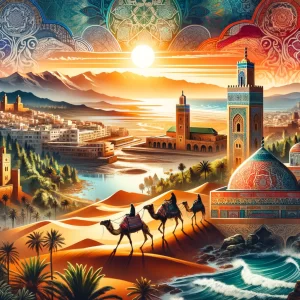







Overview of the Zodiac: Origins and Symbolism
The zodiac is an ancient system of symbolism that has been used for thousands of years to understand human behavior, personality traits, and life events. It consists of twelve signs or characters, each with its own unique characteristics, strengths, and weaknesses. In this article, we will delve into the origins and meaning behind the zodiac, exploring its evolution over time and https://zodiac-casino-edmonton.ca/ its significance in modern culture.
The Ancient Roots of the Zodiac
The word “zodiac” comes from the Greek term “zygos,” which means circle or wheel. The ancient Greeks used a zodiacal system to describe the movements of celestial bodies, including planets, stars, and constellations. They believed that these bodies had significant influence on human affairs and built their mythology around them.
One of the earliest known examples of a zodiac is found in ancient Babylonian astronomy. Around 400 BCE, the Babylonians developed a system of astrology based on twelve signs or houses, each representing a particular aspect of life, such as love, war, or prosperity. This system was later adopted by other civilizations, including the Greeks and Romans.
The Origins of the Twelve Signs
Over time, the ancient Babylonian zodiac evolved to include twelve distinct characters: Aries, Taurus, Gemini, Cancer, Leo, Virgo, Libra, Scorpio, Sagittarius, Capricornus (or Goat Horn), Aquarius, and Pisces. Each sign is associated with specific characteristics, traits, and energies that are said to influence individual personalities.
For example:
- Aries is often represented by the ram’s head and is associated with courage, ambition, and impulsivity.
- Taurus is linked to the bull and embodies stability, practicality, and patience.
- Scorpio represents the scorpion and is characterized as intense, perceptive, and profound.
How the Concept Works
Astrology posits that each sign has its own unique astrological chart or map of celestial bodies at a specific time. By examining this chart, astrologers claim to gain insight into an individual’s personality, strengths, and weaknesses. They also use it to predict future events and trends.
When interpreting the zodiac, many modern practitioners draw on various symbolic languages:
- Planetary associations: Each sign is linked with particular planets or their energies (e.g., Venus for love, Mars for conflict).
- Element allegiances: Signs are categorized by elements – Earth, Fire, Air, Water – that correspond to distinct traits and attributes.
- Seasonal affiliations: Many signs have strong connections to specific seasons of the year.
Symbolism in the Zodiac
The zodiac’s symbolic language extends beyond its individual characters. Each sign is part of a larger cycle or pattern, which is interpreted as having greater meaning than the sum of its parts.
For instance:
- The Sun and Moon are often seen as central figures around which other signs revolve.
- Planetary alignments can influence entire periods of human history.
- Mythological connections between zodiac characters suggest deeper symbolic undertones.
Evolution Over Time
As societies, cultures, and civilizations evolved over the centuries, so did our understanding of the zodiac. Many ancient traditions have adapted or expanded on earlier interpretations to create new perspectives:
- Hellenistic astrology emphasized planetary relationships.
- Medieval European practices centered on courtly love poetry.
- Eastern Asian astrologies drew from Chinese, Japanese, and Hindu cultures.
Global Cultural Significance
Today, interest in the zodiac spans diverse social backgrounds and geographical locations. Whether rooted in mythological or practical applications, people engage with this complex system:
- Modern self-discovery movements draw on astrology to learn about personality traits.
- The internet has facilitated widespread accessibility of online astrology resources and quizzes.
Common Misconceptions
Despite its long history, the zodiac remains a source of mystery for many. Debunking common myths can help deepen understanding:
- Not all cultures adhere to Western astrological systems – other civilizations employ varying zodiacal frameworks.
- Astrology is often misunderstood as being strictly scientific or only related to planets.
Astrological Variations and Alternatives
While some argue that traditional astrology has been overly rigid, others have proposed revisions or adaptations:
- Modern planetary systems aim for more precise mathematical models of celestial movements.
- Ancient texts show varied interpretations across regions, with local traditions influencing its meaning.
In conclusion, the zodiac’s intricate system weaves a rich tapestry of symbolism. From ancient roots to modern-day uses, its significance transcends cultural boundaries and remains an active area of study and fascination.
As individuals continue to grapple with human nature and cosmic mysteries alike, it is clear that this ancient system has played – and continues to play – a lasting role in shaping our understanding of ourselves, the universe we inhabit, and the intricate web connecting us all.